Frequently Asked Questions (FAQs)

What is the Income-tax Act, 2025, and does it apply to my past tax years?

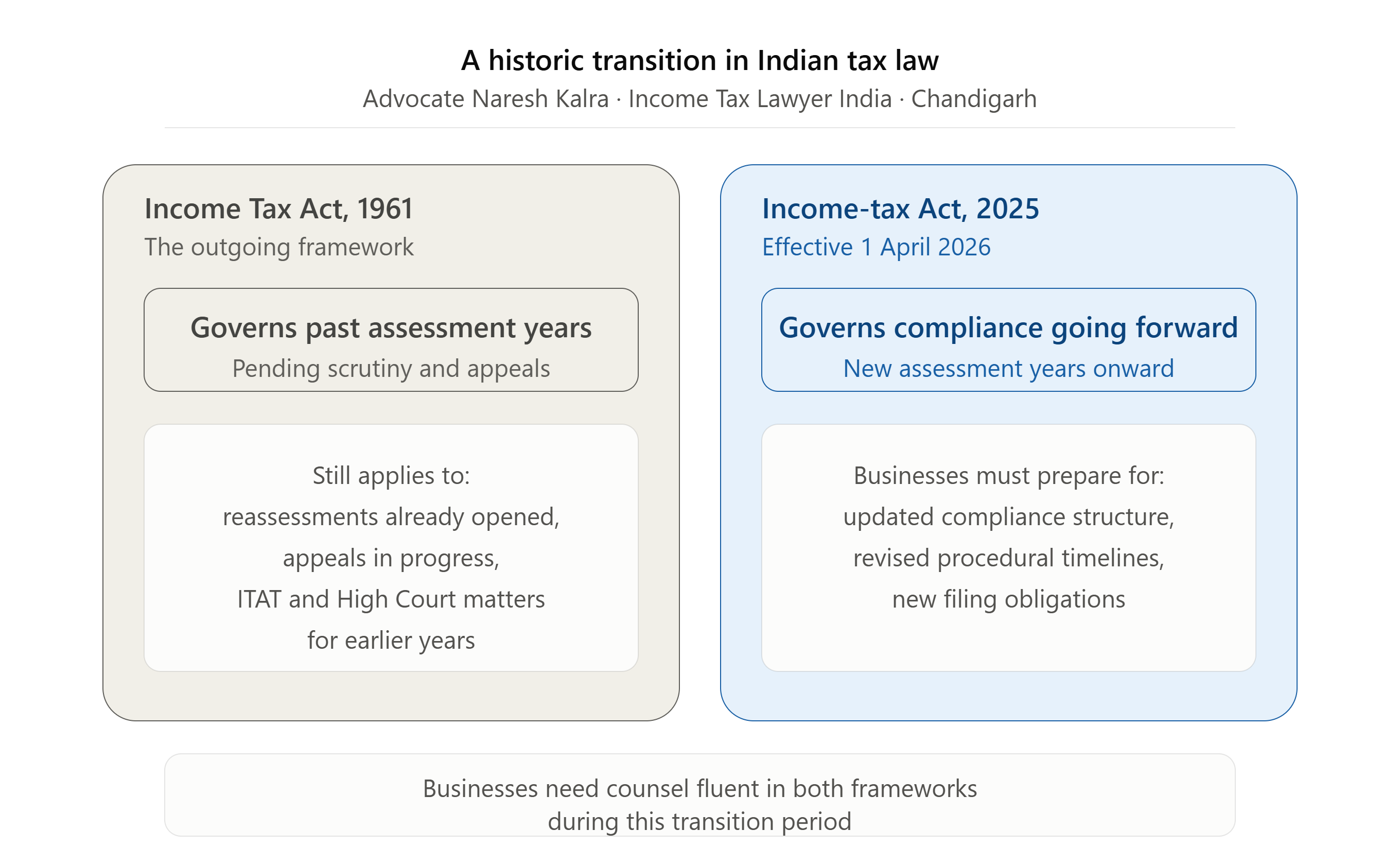
The Income-tax Act, 2025 replaces the Income Tax Act, 1961, with effect from 1 April 2026. Assessment years and proceedings governed by the 1961 Act — including pending scrutiny, reassessment, and appeals for earlier years — continue under that framework, while compliance obligations from the effective date forward will follow the 2025 Act. Our Income Tax Lawyer India team in Chandigarh advises on which framework governs your specific matter and prepares businesses for the transition.

What is the Faceless Assessment Scheme, and how does it change how I respond to a notice?

Under the Faceless Assessment Scheme, income tax scrutiny and reassessment proceedings are conducted entirely through a digital, document-based process, with no direct contact between the taxpayer and the assessing officer, and cases randomly allocated nationally. This means your written response must be complete and fully self-sufficient — there is no opportunity for informal clarification. Our Income Tax Notice Lawyer India team in Chandigarh structures every response specifically for this framework.

My past assessment has been reopened under Section 148. What are my options?

A Section 148 reassessment notice can be challenged on two fronts — the validity of the reopening itself, given the statutory conditions and timelines governing when authorities can reopen a concluded assessment, and the substantive merits of the underlying tax position. Our Tax Reassessment Lawyer India team in Chandigarh and Ludhiana assesses both angles immediately upon reviewing a reopening notice, since a successful challenge to the reopening itself often resolves the matter entirely.

How does the appeal process work if I disagree with my assessment order?

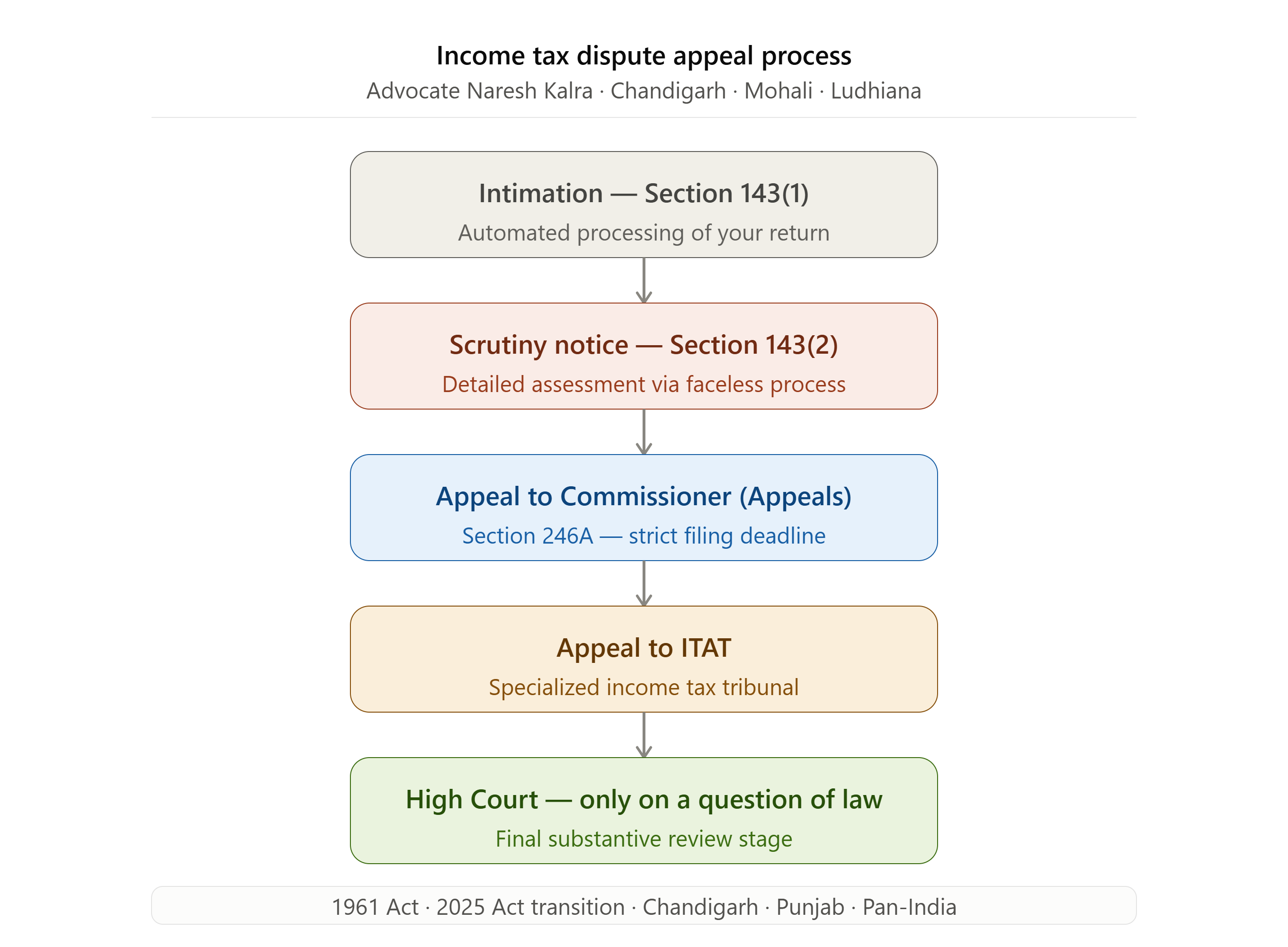
The first appeal against an adverse assessment order goes to the Commissioner (Appeals) under Section 246A, within a strict statutory filing deadline. If relief is not granted, the matter can be escalated to the Income Tax Appellate Tribunal (ITAT) — a specialized tribunal — and, only on a substantial question of law, further to the High Court. Our ITAT Appeal Lawyer India team in Chandigarh represents clients through both appellate stages.

What documentation do I need for transfer pricing compliance if my business has cross-border transactions?

Under Section 92 and related transfer pricing provisions, businesses with related-party cross-border transactions must maintain contemporaneous documentation demonstrating that pricing reflects arm's length principles — comparable transaction analysis, functional and risk analysis, and formal transfer pricing study documentation. Inadequate documentation creates significant reassessment risk even where the underlying pricing was genuinely commercial. Our Transfer Pricing Lawyer India team in Chandigarh advises on both DTAA applicability and documentation adequacy.

Whatsapp Chat