What should I do if my goods are seized by customs in India?
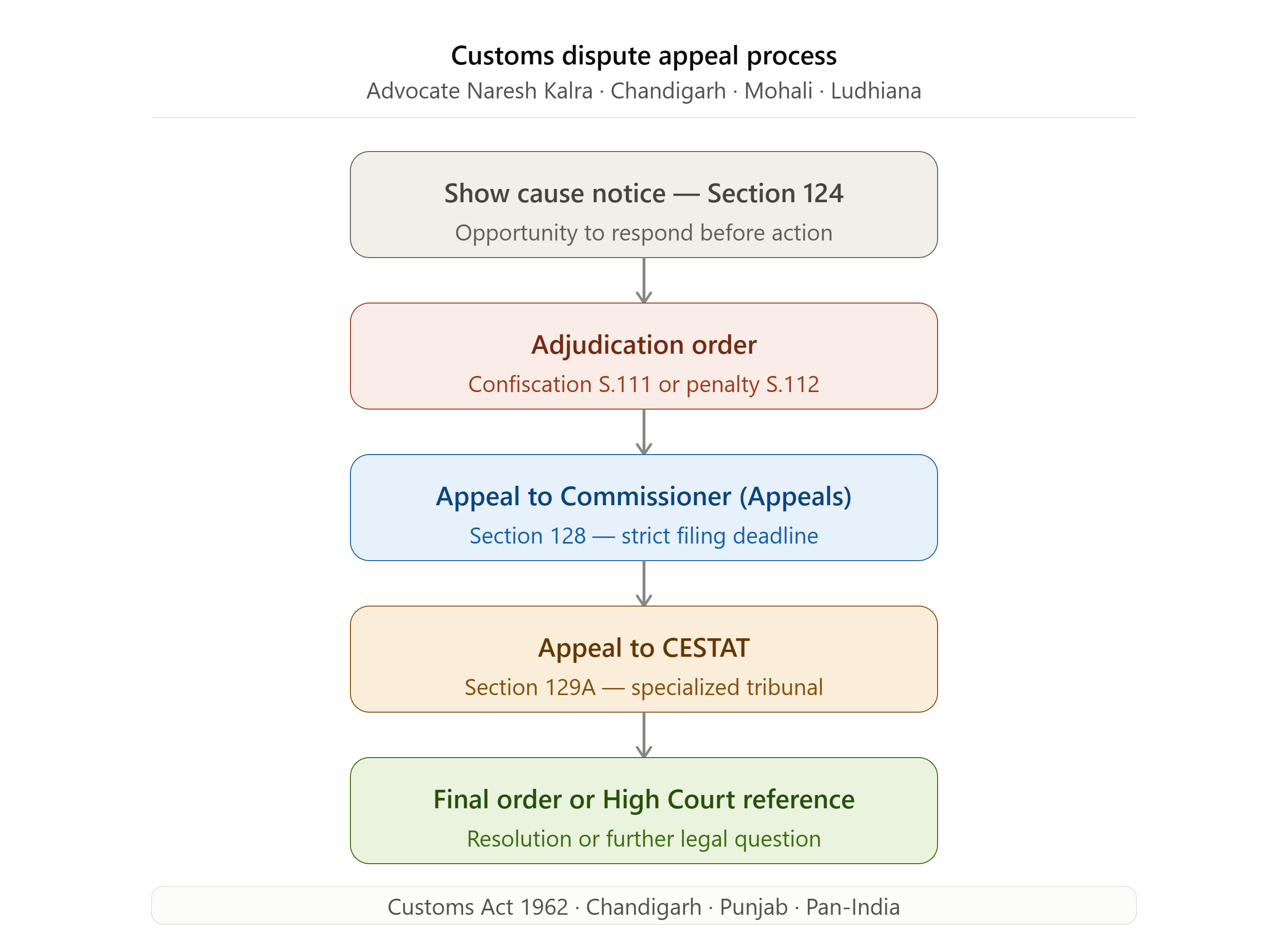
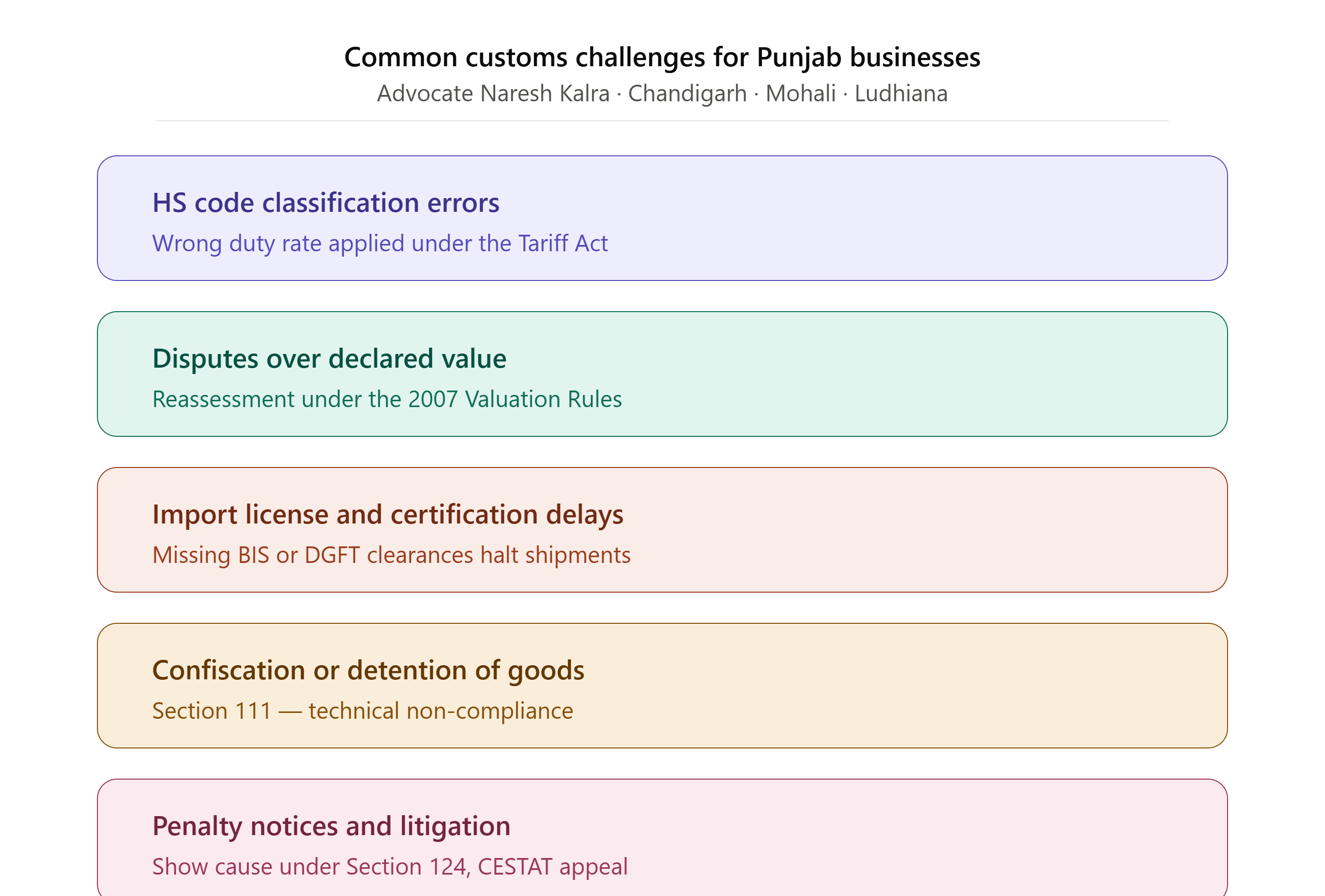
Immediate action is essential. Under Section 111 of the Customs Act, 1962, seized goods require a show cause notice under Section 124 before final confiscation, giving you an opportunity to respond with documentation and legal argument. Engage a Customs Seizure Defence Lawyer immediately to submit proper documentation, challenge the basis for seizure, and pursue urgent release — every day of continued detention typically increases storage costs and business disruption. Our team in Chandigarh responds to seizure matters with same-priority urgency.
How do I appeal a customs duty demand or penalty order in India?
The first appeal against an adverse customs order goes to the Commissioner (Appeals) under Section 128 of the Customs Act, within a strict statutory filing deadline. If relief is not granted, the matter can be escalated to CESTAT (Customs, Excise and Service Tax Appellate Tribunal) under Section 129A — a specialized appellate tribunal with its own procedural framework distinct from ordinary civil courts. Our CESTAT Lawyer India team in Chandigarh represents clients through both appellate stages.
What causes most HS code classification disputes in India?
Classification disputes typically arise when customs authorities interpret a product's Harmonized System code differently than the importer, resulting in a different applicable duty rate under the Customs Tariff Act, 1975. Ambiguous product descriptions, evolving technology products without clear precedent classification, and composite goods with multiple potential classifications are common triggers. Our HS Code Classification Lawyer India team in Chandigarh advises on defensible classification positions before shipment to prevent disputes entirely.
How is customs valuation determined, and can it be challenged?
Customs valuation follows the Customs Valuation (Determination of Value of Imported Goods) Rules, 2007, which generally accepts declared transaction value unless specific doubt indicators are present. Where customs authorities reject declared value and apply alternative valuation methods, this determination can be challenged through representation, documentation submission, and, if necessary, formal appeal. Our Customs Duty Lawyer India team in Chandigarh has direct experience defending declared valuations against authority reassessment.
What trade incentive schemes should exporters in Punjab be aware of?
Key schemes include the Export Promotion Capital Goods (EPCG) scheme, allowing duty-free import of capital goods for export production; the Service Exports from India Scheme (SEIS); and SEZ registration benefits for qualifying businesses. Correct application and ongoing compliance documentation are essential to avoid future recovery demands for improperly claimed benefits. Our Import Export Legal Advisor India team in Chandigarh and Ludhiana helps Punjab businesses access these incentives fully and compliantly.