Frequently Asked Questions (FAQs)

How long does arbitration take in India compared to litigation?

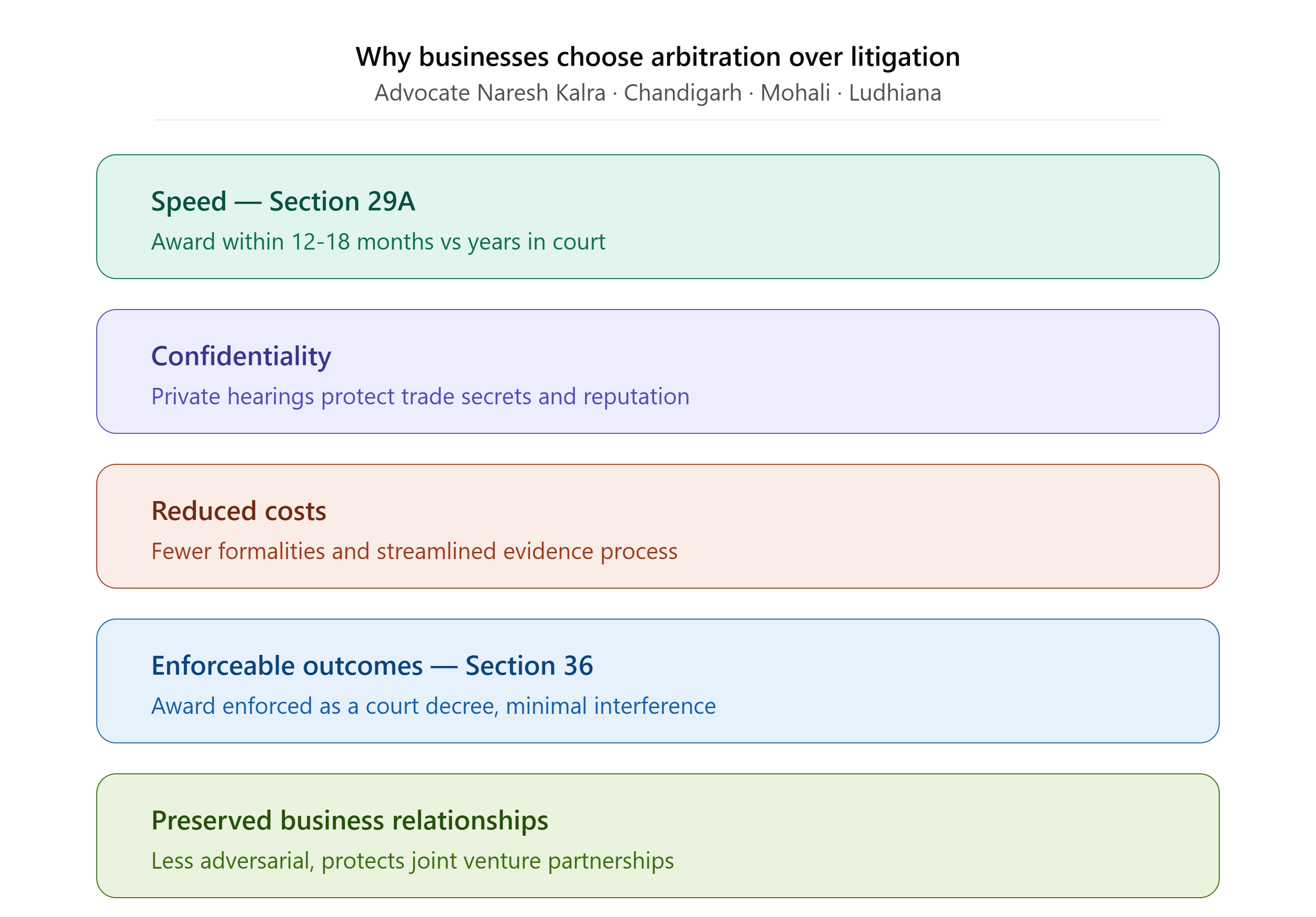
Under Section 29A of the Arbitration and Conciliation Act, 1996 (introduced by the 2015 amendment), arbitral tribunals must render an award within 12 months of entering reference, extendable by mutual party consent to 18 months. Court litigation, by contrast, can extend for years given case backlogs. Our Corporate Arbitration Lawyer India team in Chandigarh uses this statutory timeline as a genuine strategic advantage for clients seeking faster commercial resolution.

Can an arbitration award be challenged in an Indian court?

Yes, but only on narrow, specific grounds under Section 34 of the Act — including incapacity of a party, an invalid arbitration agreement, denial of proper opportunity to present the case, or conflict with India's public policy. Indian courts have progressively limited judicial interference with arbitral awards to preserve arbitration's core advantage of finality. Our Arbitration Award Enforcement Lawyer team in Chandigarh advises on both pursuing and defending against Section 34 challenges.

Is my commercial dispute suitable for arbitration, or does it need to go to court?

Arbitrability depends on both the presence of a valid arbitration clause in your contract and the nature of the dispute itself — following the Supreme Court's test in Vidya Drolia vs Durga Trading Corporation (2021), certain matters (like criminal offences or specific matrimonial disputes) remain outside arbitration's scope even with an arbitration clause. Our Commercial Arbitration Lawyer India team in Chandigarh assesses arbitrability at the outset of every matter.

What is the difference between institutional and ad-hoc arbitration?

Institutional arbitration is administered by an established body — such as the MCIA — with formal procedural rules and administrative support, often preferred for high-value or cross-border disputes. Ad-hoc arbitration is conducted directly by the parties and arbitrator without institutional oversight, offering greater flexibility and cost efficiency for many domestic Punjab-based commercial disputes. Our team advises on which structure best fits your specific dispute's value and complexity.

How is an arbitration award enforced in India?

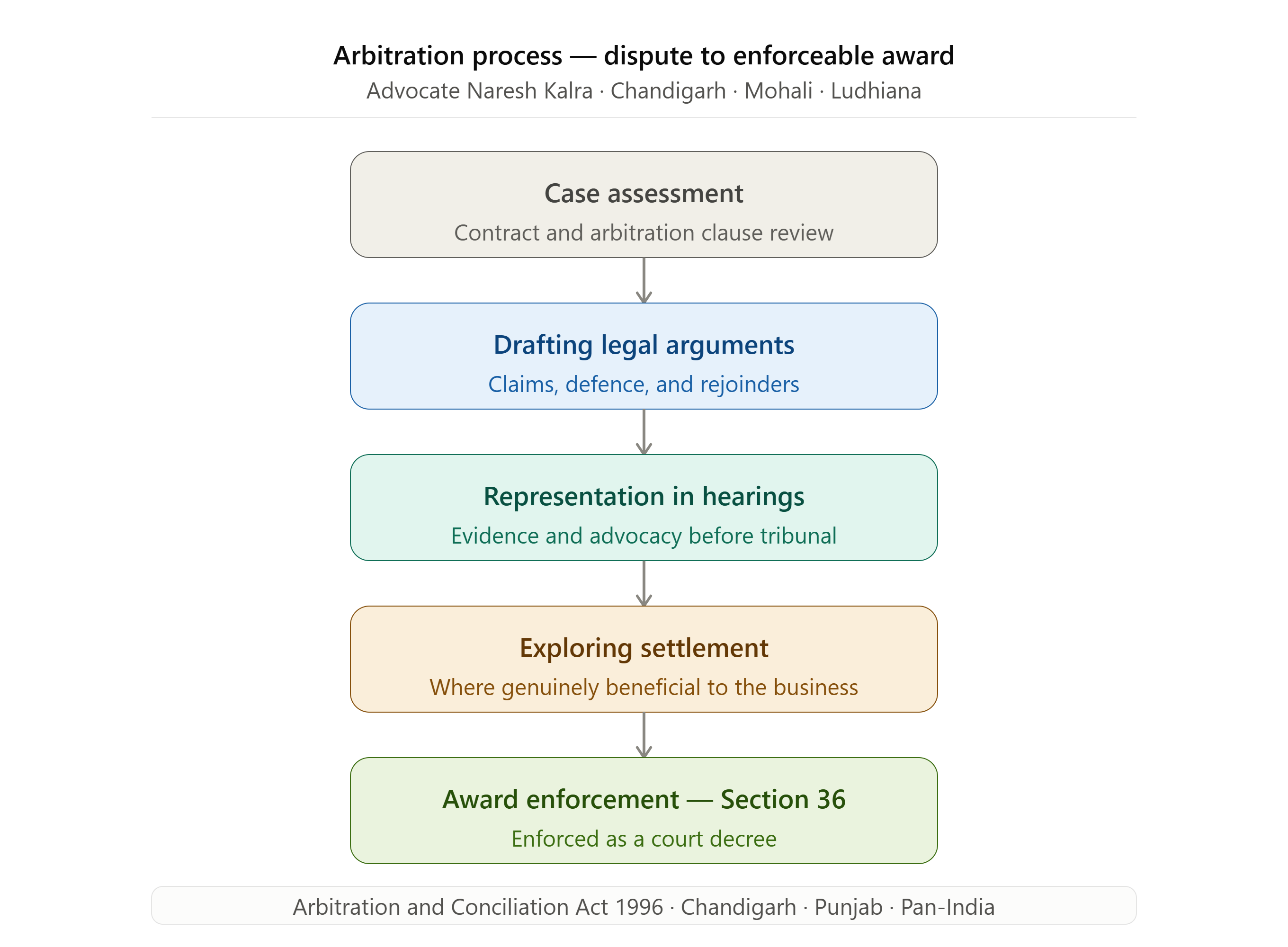
Under Section 36 of the Arbitration and Conciliation Act, once the limited challenge period under Section 34 has passed without a successful challenge, the arbitral award is enforceable as if it were a decree of the court — through the same execution mechanisms available for civil judgments. Our Arbitration Award Enforcement Lawyer team in Chandigarh and Ludhiana pursues execution proceedings to ensure awards translate into actual recovery, not just paper victories.

Whatsapp Chat